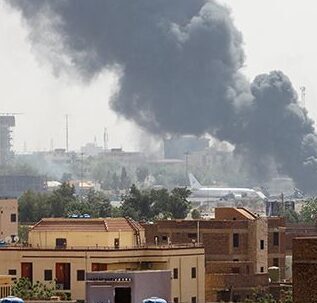
World Humanitarian Day 2025: Honouring humanitarian workers who lost their lives
Today on World Humanitarian Day, the Australian Council for International Development (ACFID) joins Caritas Australia and Safer World for All in paying tribute to the dedication and sacrifice of humanitarian workers, especially those who have lost their lives in the service of others during conflicts and crises.
Since 2024, more than 648 humanitarian workers have been killed, marking the deadliest year on record for the sector. In 2024 alone, a record 383 humanitarian workers were killed in the line of duty or in their homes – most of them national colleagues. Many more were injured, kidnapped or detained.
Perhaps more than ever, the humanitarian system is under threat and the rules that keep frontline responders and civilians safe are losing effect. Frontline workers and civilians are being increasingly targeted, their safety and the delivery of life-saving assistance remain at serious risk.
This afternoon, ACFID alongside Caritas Australia and Safer World for All hosted a commemorative and wreath laying service at the Australian Overseas Aid Volunteer Memorial in Canberra, bringing together representatives from government, civil society, and diverse faith communities to reflect, honour and stand in solidarity with humanitarian workers around the world.
Quotes attributable to Australian Council for International Development CEO Matthew Maury
“Humanitarian workers are lifelines in times of crisis. In conflict, disaster, or displacement, they’re the ones getting water, food, and medicine to civilians who need it most. This essential, life-saving work is under increasing threat.”
“Attacks on frontline workers and humanitarian convoys continue in defiance of international law. World Humanitarian Day is a solemn reminder that without appropriate safeguards and accountability, aid will continue to be blocked, and lives unnecessarily lost.”
“The Australia Government’s global leadership on the Declaration for the Protection of Humanitarian Personnel is an important step toward stronger protection and accountability. We hope this leads to real, lasting change.”
“Attacks on humanitarians have been reported in 42 countries this past year, including Sudan, Afghanistan, and Gaza – the most dangerous place on earth for frontline workers, with more than 408 aid workers killed there since 7 October 2023.”
“Almost 95 per cent of those killed are local aid workers.These are people helping their own communities often while living through the same crisis themselves yet often their deaths and work go unrecognised and untold. They must be protected.”
Quotes attributable to Kirsten Sayers, CEO at Caritas Australia
“Humanitarians represent the very best of humanity, standing alongside the world’s most vulnerable in some of its most dangerous places. Their work deserves protection — yet each year, it becomes more perilous.”
“In Ukraine our partners describe an expanding “death zone” along the front line that now spans 25 kilometres. Work in these zones is dangerous and even deadly, with drone attacks on civilians and humanitarian workers alike. In the Democratic Republic of Congo, two Caritas Goma staff have been kidnapped in recent weeks. In Gaza – where our colleagues have been killed and injured in the past two years – our partners describe “living a horror movie”. Many of them are wasting away alongside the people they serve, with work as their only motivation.”
“Today, we honour their sacrifice while calling for stronger safeguards for humanitarian workers, and accountability when those protections are breached. There is hope in Minister Wong’s initiative to launch a Declaration for the Protection of Humanitarian Personnel, which is a vital step forward in rallying the international community to stand with and protect these brave individuals who risk everything to save others.”
Quotes attributable to Samir Bennegadi, CEO at Islamic Relief Services Australia
“The protection of humanitarian workers and civilians is a basic human right and a legal obligation. Yet in 2025, we continue to see aid workers attacked, displaced, and even killed while carrying out life-saving work.”
“On March 25, 15 aid workers, which includes staff from the Islamic Relief family’s local partners, Palestine Red Crescent Society (PRCS) and UNRWA, were uncovered in a mass grave in Rafah. On June 18, the brother of one of our aid workers was killed while trying to get flour for his family. On 14 August, 5 family members of another brave Islamic Relief aid worker in Gaza were killed in an airstrike.”
When aid workers are targeted, entire communities lose access to food, water, shelter, and medical care. Today, we pause to recognise their extraordinary work, the sacrifices they make, and the courage it takes to stand with people in crisis, no matter where, no matter who, and no matter what. And we call on all parties to uphold international humanitarian law and ensure that those who protect life are themselves protected.”
For more information or to arrange an interview, please contact ACFID MEDIA on 0401 721 064 or CARITAS MEDIA on 0484 002 021.
Quotes attributable Sarah Schwartz, Executive Officer at the Jewish Council of Australia
“We are heartbroken by the scale of atrocities being committed in Gaza and other crises around the world, including the deliberate targeting of humanitarian workers – those who risk everything to deliver food, water and medicine in the midst of devastation.”
“Judaism teaches us that whoever saves a life is considered to have saved the world. Humanitarian workers embody that teaching. The Jewish Council calls on all governments to uphold international law and ensure their ability to safely deliver critical aid.”
Humanitarian workers facts and figures
2024: 861 aid workers were victims of major security incidents across 42 countries:
383 were killed, 308 wounded, 125 kidnapped and 45 detained or arrested. Most
were national staff, and many were killed in non-operational settings.
This death toll is a 31 per cent increase compared to 2023, when 293 aid workers
were killed. It is the highest ever recorded.
The highest numbers of fatalities in 2024 were recorded in Gaza (181) and Sudan
(60). Twenty-one countries saw higher fatality counts than the previous year.
The past few years have seen the steady rise of state actors as the most common
perpetrators of violence affecting aid workers. In 2024, state violence killed 182 aid
workers and left 119 wounded.
Under international humanitarian law, attacks, harassment, intimidation, and
arbitrary detention of relief personnel, and destruction, misappropriation and
looting of relief objects, are prohibited.
Background
World Humanitarian Day is commemorated every year on the 19th of August to pay tribute to humanitarian workers killed and injured in the course of their work, and to honour all aid and health workers who continue to provide life-saving support and protection to those most in need.
On the 19th of August 2003, a bomb attack on the Canal Hotel in Baghdad, Iraq, killed 22 humanitarian aid workers, including the United Nations Special Representative of the Secretary-General for Iraq, Sergio Viera de Mello. Five years later, the UN General Assembly adopted a resolution designating the 19th August as World Humanitarian Day.