
Home 5 Our Focus 5 Strengthen Civil Society

Strengthening Civil Society

Civil Society

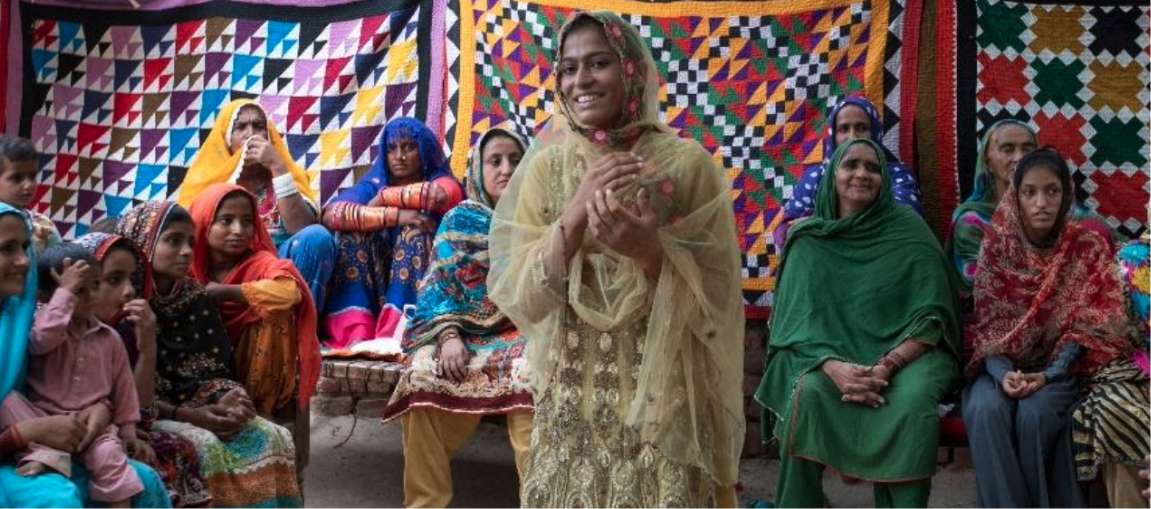
Samreen, 17, shares her experiences of Oxfam’s She Can Lead project with her community. Samreen has been involved with the She Can Lead project for the last 3 to 4 months. She has also attended Community Training Sessions and hopes to make positive changes in her community. Photo: Khaula Jamil/OxfamAUS

In the face of increasing poverty, civil society is essential in creating transformational change and championing rights, inclusion, and development – all centered in the local context and communities. These groups include non-governmental organisations, community groups, faith-based organisations, trade unions, media, educational institutions, and informal groups that exist outside the sphere of the state and the market.

Civil societies are a cornerstone of regional stability and ensure that the voices of the marginalised – especially women and girls, people with disabilities, and children – are meaningfully included in the development initiatives that will affect their aspirations and wellbeing. But in order to undertake this role, civil society must be resilient, vibrant, and free to operate. Civic space in our region has never been more vital nor under greater threat. Free and vibrant civil society networks enable two-way feedback between citizens and governments, promote and enable the inclusion of women and other minority groups, and fill gaps in essential services.

Supporting civil society at home and abroad is a priority area of focus under ACFID’s 2020-2025 Strategic Plan. ACFID and its members are committed to consistently raising and amplifying the voice of civil society actors and responding to challenges to civic space. ACFID is also committed to supporting civil society organisations in the Asia-Pacific to strengthen their ability to respond to opportunities and challenges in their context.

Policy and Advocacy on Civil Society

ACFID’s policy brief on Civil Society as the Cornerstone of Effective and Inclusive Development outlines our vision for the role of civil society in the development cooperation and humanitarian responses. Supporting and strengthening civil society not only enables Australia to deliver a more effective and locally led development program – it also supports pluralism, strengthens effective and accountable governance, builds deeper partnerships, and contributes to stability across the Indo-Pacific.

ACFID has also engaged with the OECD Development Assistance Committee on their development of a Recommendation on Enabling Civil Society in Development Cooperation and Humanitarian Assistance. ACFID continues to work with the Australian government on implementation of its commitments as an Adherent to this Recommendation.

Partnership with DFAT

ACFID advances the role of NGOs in Australia’s aid program through its partnership with DFAT.

The purpose of this partnership is to support collaboration between DFAT and ACFID that assists DFAT and the Australian development sector to contribute to inclusive and sustainable economic development, poverty reduction, and human rights for all. The partnership Memorandum of Understanding, most recently reaffirmed, updated and signed in 2025, builds upon decades of engagement between the Australian Government and ACFID in international development.

The partnership supports collaboration on the following objectives:

a) Enhanced policy and practice dialogue between DFAT and the Australian NGO development sector through ACFID, facilitating exchange of knowledge and ideas to increase development and humanitarian effectiveness.

b) Enhanced policy and practice dialogue between DFAT and ACFID including on complex matters related to counter-terrorism financing, sanctions, child protection, preventing sexual exploitation, abuse, and harassment (PSEAH), fraud, anti-corruption, and environmental and social safeguards.

c) Communicating the development cooperation program, and its impacts and benefits to the Australian public, including sharing successes, lessons learnt and effective sector practice.

d) Increased capability, effectiveness, and accountability of the Australian NGO development sector, through standard setting and organisational development.

e) Upholding and advancing internationally agreed human rights conventions and declarations, and multilateral development and humanitarian cooperation, under the Charter of the United Nations.

Partnerships with regional and global civil society bodies

ACFID maintains networks with NGOs and civil society organisations in Australia, throughout our region, and across the world.

We are a member of the global NGO-alliance ICVA, whose mission is to make humanitarian action more principled and effective by working collectively and independently to influence policy and practice.

ACFID is a partner to the Global Standard for CSO Accountability, an initiative of nine civil society accountability networks from around the world. ACFID collaborates with its Global Standard partners to learn from each other, gain a truly global view on CSO accountability, improve our own Code and promote robust and effective accountability mechanisms for civil society.

Development practice on civil society

Development of a Pacific Regional CSO Accountability Framework

In collaboration with the Pacific Island Association of NGOs (PIANGO) and its members, ACFID has developed a Pacific Regional CSO Accountability Framework. The Framework describes a set of standards and evidence indicators that are relevant for Pacific civil society organisations, covering all aspects of an organisation’s activities including governance, human resources, development approaches, financial and resource management systems. Aligned to the Global Standard, the Framework provides Pacific civil society with shared language and tools to review their accountability practices and hold themselves and each other to account. It is also an invitation for governments, international partners and donors to accept a Pacific model and vision of accountability, that reflects the values, strength and diversity of Pacific civil society.

In 2022-23, ACFID is continuing to partner with PIANGO to support the implementation of the Pacific Framework through the development of self-assessment tools, guidance materials and targeted support for PIANGO members wanting to implement the Code in their national contexts.

Events

ACFID reaffirms our call to action on civil society through events that we hold/attend.

Conference 2024:
ACFID’s Conference 2024 was focused on the theme of Solidarity and Resilience. You can read more about the Conference on the page here. 

Past Conferences:
View ACFID’s previous conferences here.

Resources

Deductible Gift Recipient Reform Submission to the Treasury: February 2023.

ACFID’s submission to the Treasury consultation on reform of the Deductible Gift Recipient registers including the Overseas Aid Gift Deductibility Scheme, which affects many members.

Learning

Learn with ACFID: Introduction to Safeguarding

Login to our learning area for this self-paced course.

Guidance Collaboration and Partnerships

ACFID Submission to the JSCFADT Inquiry into Australia's response to the priorities of Pacific Island countries and the Pacific region

Guidance Collaboration and Partnerships

ACFID Guidance on Collaboration and Partnerships

This Guidance is designed to help and support ACFID members understand, meet and implement their obligations under the ACFID Code of Conduct.

Guidance Collaboration and Partnerships

ACFID Guidance on Collaboration and Partnerships

This Guidance is designed to help and support ACFID members understand, meet and implement their obligations under the ACFID Code of Conduct.

Resource Hub

Building Transformative Relationships with DPOs

This webinar is an exciting opportunity to learn what it takes to work well with Disabled People’s Organisations (DPOs).

Humanitarian Action for Those in Greatest Need

Effective and inclusive Development

Supporting NGOs as Valuable Partners

Development at the Heart of Australia’s International Engagement

Preventation of Sexual Exploitation and Harrasment

Loading...