
Home 5 Our Focus 5 Enable quality locally-led development and humanitarian action

Enable quality locally-development and humanitarian action

Inclusive Development

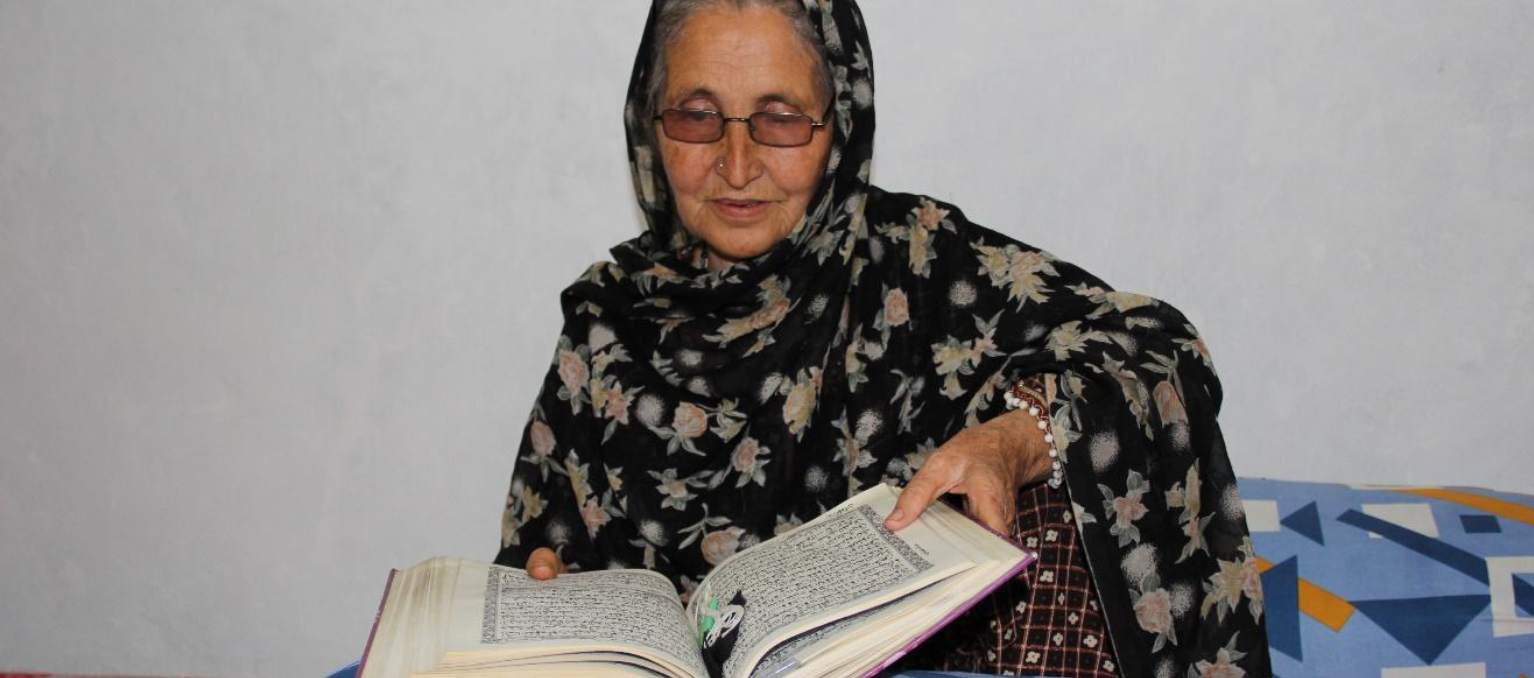
For the past eight years, Haseena has lived with constant pain and irritation in her eyes from trachoma, the world’s leading infectious cause of blindness.

Due to her condition, the 53-year-old mother of two in Pakistan’s Chitral District was left unable to work, relying on her husband’s modest wage as a labourer to support her family.

One day a Lady Health Worker visited Haseena’s village and identified her as an eligible patient for trachoma trichiasis surgery. She advised Haseena and her family to visit a nearby eye camp organised by The Fred Hollows Foundation in Chitral.

Haseena went to the camp and underwent surgery on both of her eyes, saving her sight.

After the surgery, Haseena and her family were overjoyed and expressed thanks to The Fred Hollows Foundation and its donors for providing her relief from the pain she had suffered for eight years. She was overcome with joy that she could now cook for her family again and have sound sleep, free of pain. Photo: The Fred Hollows Foundations Australia.

Australia’s approach to locally-led action should be guided by local civil society, implemented through long-term policy shifts and accompanied by sustained and adequate funding. 

A locally-led approach recognises that local actors are better placed to facilitate viable transitions from response to recovery programming due to their sustained proximity to, and intimate understanding of, affected populations. It is facilitated by strong and equal partnerships, quality direct funding, transparency, mutual accountability, diversity and empowerment in staffing and leadership. Successful locally-led action recognises the power imbalances that influence development and humanitarian initiatives and places power in the hands of those directly affected by these initiatives.

Australian development actors can support the redistribution of power needed to recreate a system that places diverse local knowledge and actors at its core and that guarantees long-term sustainability while safeguarding development outcomes. This means going beyond technocratic solutions to ensure organisations, including donors, reflect on what needs to happen to challenge colonialist, sexist and racist practices and systems that remain prevalent in the international development system. Development initiatives that are locally-led are more likely to have sustainable, long-term benefits for communities. These initiatives meet the needs of communities and can support positive shifts in power relations and local skills development.

Local civil society is at the heart of locally-led development with a central role in representing the needs of the individual to government. A strong, robust civil society is critical to realise effective and successful locally-led action. Australia’s bilateral partnerships with Pacific governments must be balanced by a simultaneous approach that steps up efforts to strengthen civil society. This dual approach should reinforce efforts to develop resilient, robust and accountable institutions and governments that will in turn be responsive to and represent local civil society. Partner governments play the role of ‘local actors’ when they are responsive and representative of the wishes of local civil society as opposed to serving the interests of specific individuals or politically beneficial groups.

Many Australian NGOs have well established partnerships and connections with local actors and can play a valuable role connecting DFAT with local partners and communities. The intergenerational relationships of mutual respect and trust that Australian NGOs hold with local communities across the region and globally means they are well placed to deliver on the Government’s locally-led policy priority. Three-quarters of Australian NGOs already support local partners with their own funds.

Implementing the Government’s vision and approach to ‘supporting locally-led change’ requires adequate resourcing, sustained funding and a sophisticated approach that sets out a program logic for how Australia will realise this vision in practical terms across the development program.

ACFID calls on the Government to

Ensure DFAT’s approach to locally-led development is informed by:

  • commissioned research to survey local organisations on their preferences for funding modalities and ensure funding decisions are informed by local voices;
  • co-creating reporting, risk management requirements and program design settings with local partners;
  • specialist in-house expertise;
  • regular independent reviews onDFAT’s approach which incorporate the views of local actors impacted;
  • undertaking a rigorous review of DFAT’s current approach to risk management to remove barriers to authentic partnerships in line with recent changes to ACFID’s Code of Conduct.

Transition to providing flexible, consistent and long-term funding to local development and humanitarian actors.

Where identified by local partners as beneficial, support an accomapaniment approach as an immediate and interim measure, where ANGOs work alongside local partners to alleviate the administrative and reporting burdern of funding and support a transition to locally-led development.


Locally Led Development

ACFID firmly believes that development and humanitarian responses are most effective when they are based on genuine, longstanding partnerships, and designed and led by local actors and organisations. The movement towards localisation – reflected in commitments such as the Grand Bargain and the Charter for Change – is important to redress historic and ongoing imbalances in power and resources between local and international actors, including both donors and international aid organisations. Working in a locally led way means giving ownership of development activities and outcomes to local actors who are best placed to understand and respond to the needs of their communities. By its nature, this will look different in each country context, and even within countries or programs. Successful locally led action relies on strong and equal partnerships, quality direct funding, transparency and accountability on the utilisation of aid, and diversity and empowerment in staffing and leadership.

You can read more about ACFID’s commitment to effective and inclusive development in our Strategic Plan and Advocacy Agenda.

You can also read about ACFID Council’s resolution to more equitable and just ways of working, which prioritises local knowledge, expertise, leadership and autonomy.

Read  ACFID’s consolidated response to DFAT’s Discussion Note on Locally Led Development here (December 2023).


Anti-Racism and Racial Justice

ACFID recognises that racism is harmful and has real life impacts – including excluding people of colour from power and decision making – and that meaningfully addressing diversity and inclusion often requires engaging in questions of racism.

ACFID wish to initiate a vital dialogue amongst members about representation, participation, and access to decision-making. We are open to where members may go in the future with dialogue and options to address these critical issues,
but we believe it is not an option to not to discuss these matters.

As part of our commitment to racial justice, ACFID has:


Resources

A gold icon of two people reading a book

Racial Justice Resource Library Guide

Developed in October 2022, this guide is was a collaboration between ACFID and the Racial Justice Community of Practice (RJCOP).
A gold icon of two people reading a book

Resolution 1-2022: Decolonisation, Anti-Racism and Locally Led Action

ACFID Council acknowledges the inherent power imbalances and colonial legacy of our sector.
Cover with text that reads: Decolonisation and Locally Led Development Discussion Paper

Decolonisation and Locally Led Development Paper

Support and guidance for ACFID members and their staff to get started on their decolonisation journeys.
A gold icon of a computer

Yielding & Wielding Power Toolkit

Sets out practical options for individuals and organisations to further the decolonisation and locally-led agendas.
Icon of five gold people standing in triangular formation

Resolution 1-2020: Race, Diversity and Australian INGOs

ACFID Council recognises that racism is harmful and has real life impacts.
Icon of three female shaped bodies

Gender Audit Toolkit

Structured to help you learn about gender auditing through bite-sized interactive content, templates, resources and references.

Humanitarian Action for Those in Greatest Need

Effective and inclusive Development

Supporting NGOs as Valuable Partners

Development at the Heart of Australia’s International Engagement

Preventation of Sexual Exploitation and Harrasment

Loading...