
Home 5 Our Focus 5 Combat Climate Change

Combat Climate Change

Combatting Climate Change

A panel on climate justice at ACFID Conference 2024

Climate change is an existential threat to humanity and our development. Action on climate change is one of ACFID’s highest priorities in our Strategic Plan 2020-2025. ACFID is endeavouring to ensure that responding to climate change becomes a fundamental pillar of Australian inclusive and sustainable development and humanitarian policy and practice. To achieve this, ACFID and its members will act with clarity, consistency and urgency in responding effectively to climate change.

Policy and advocacy on climate change

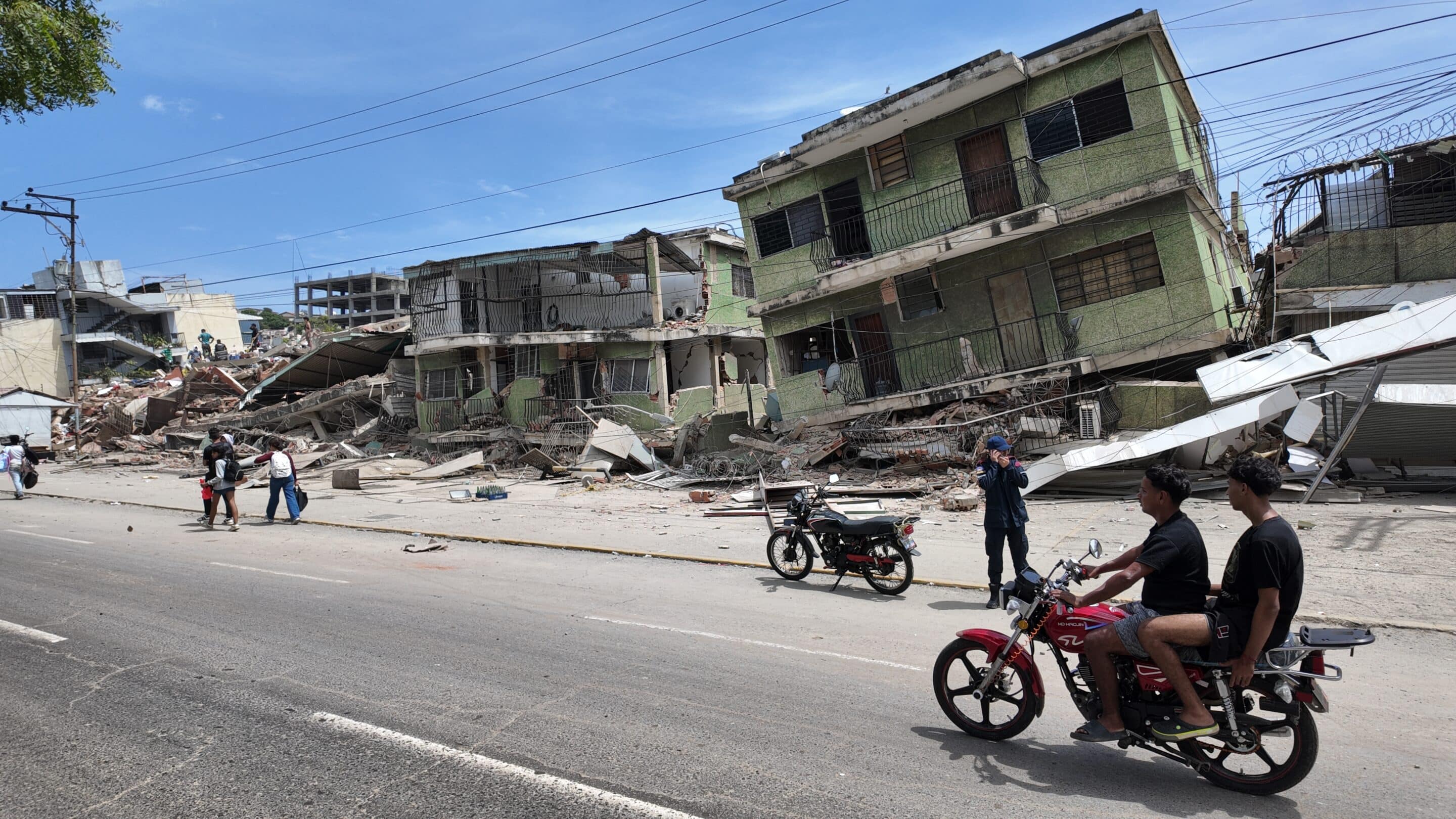
Climate change will disrupt and reverse economic and human development. Our Pacific neighbours have reaffirmed climate change as the single greatest threat to the livelihoods, security, and wellbeing of the peoples of the Pacific.

In ACFID’s 2024 Advocacy Agenda, ACFID called on the Government to;

  • Develop a whole of government approach to meet Australia’s climate finance fair share as agreed by parties under the Copenhagen Accord to acheive the collective $100bn climate finacne goal. This should be new and additional finance to existing levels of ODA.
  • Fund Australia’s fair share of Loss and Damage (including non-economic) to address the disproportionate impact of climate change on the societies, economies and culutres of developing countries most vulnerable to climate change impacts.
  • Demonstrate Australia’s commitment to a genuine partnership with Pacific Island countries by strengthening the Government’s domestic and exported greenhouse gas emissions reduction targets in line with the pathway to limit global warming to below 1.5c.

To achieve this, ACFID is:

  • Continuing to advocate for ambitious climate action, including from our advocacy asks outlined in the 2024 ACFID Climate Policy Brief. 
  • Advocating to the Australian Government Department of Foreign Affairs and Trade (DFAT) and the Department of  Climate Change, Energy, the Envrionment and Water (DCCEEW) on matters relaing to climate policy internationally.

Development practice on climate change

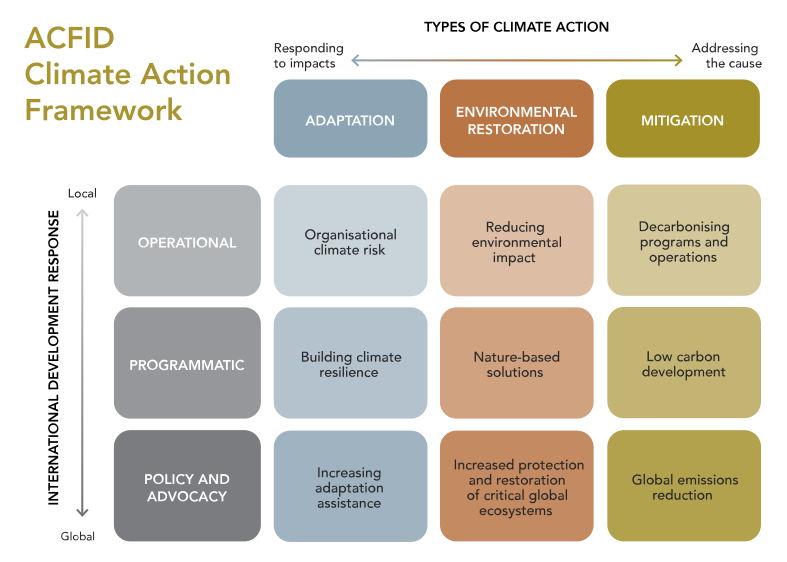
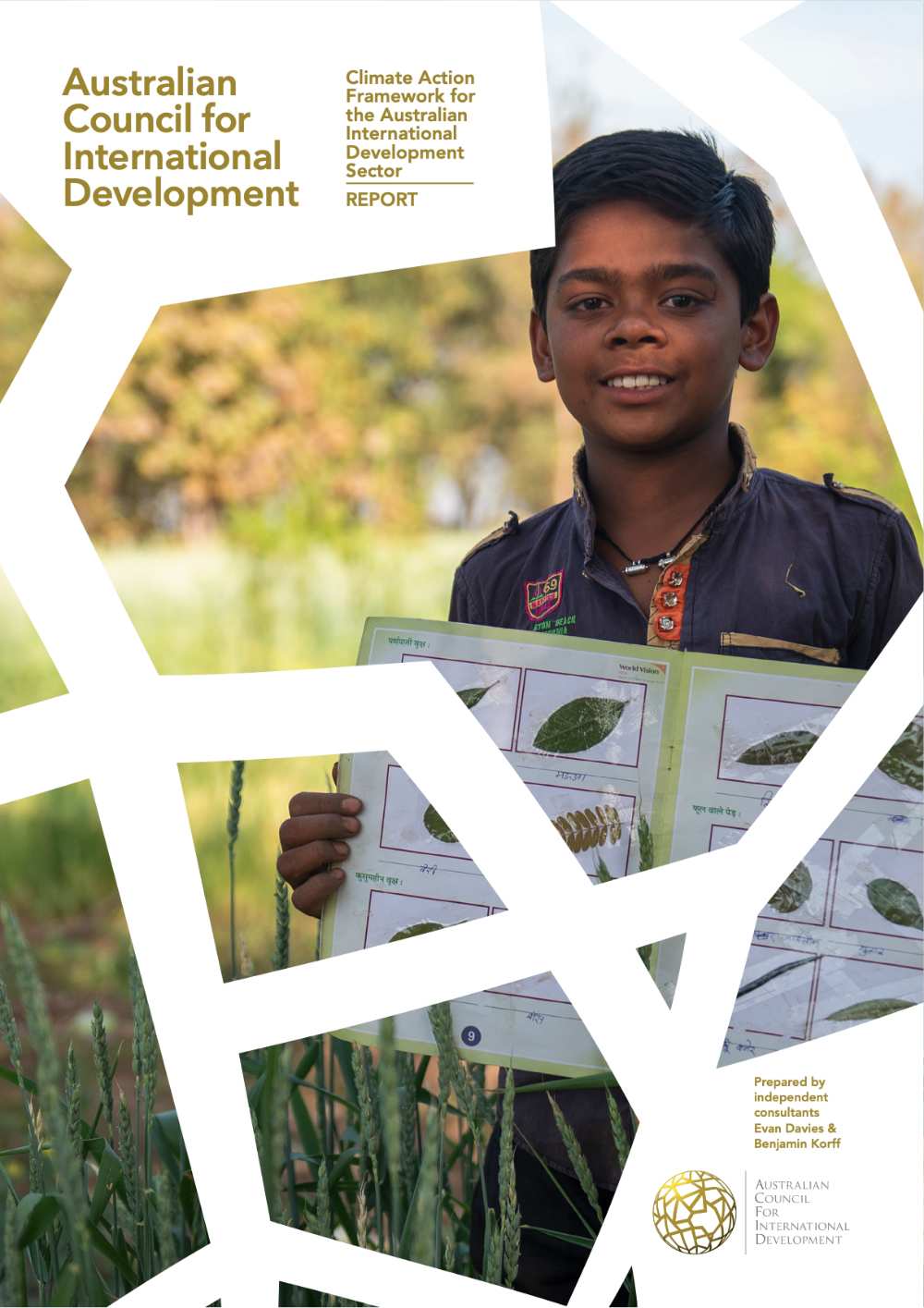
The ACFID Climate Action Framework supports Australian international development NGOs to increase their engagement and action on climate change.

A common challenge for many actors wanting to engage in climate change issues is to understand the role they can play and where they can be most effective. This framework provides a clear typology of climate actions relevant to Australian NGOs. The framework aims to increase the understanding of the types of action that can be undertaken at different levels of action and provide clearer entry points for organisations wanting to start working on climate change or seeking to step up their work.

To learn more about the Climate Action Framework, get started with the framework summary, read the full research report, or explore the climate action resource hub.

ACFID Climate Change Framework Chart


Extending the ACFID Climate Action Framework are the ‘Integrating Climate Change Action’ series of publications, including ‘Enablers of Best Practice‘, ‘Setting the Scene for ANGOs‘, and ‘A How To Guide‘  , designed to provide practice based guidance for integrating climate change action across the Australian international development sector through a research partnership with the Institute for Sustainable Futures, University of Technology Sydney. This included leading an ACFID Conference session and producing guidance, case studies and learning tools on enablers for best practice.

Climate Policy and Practice Community

The Climate Policy and Practice Community (CPPC) is one of ACFID’s Communities of Practice. The CPPC has two streams, CPPC Stream 1 meets to discuss and share good practice, tools and resources for climate action at the programmatic and operational level of work. CPPC Stream 2 meets to discuss Policy and Advocacy related to climate action. The CPPC can be joined by ACFID members through MyACFID. Instructions for joining CoPs can be found at ACFID Community of Practice Guidelines.

Climate Action Peer Learning Program

As part of its ongoing commitment to support members in addressing climate change, ACFID implemented the Climate Action Peer Learning Program (CAPLP) from March to June 2024. Guided by ACFID’s Development Practice Committee’s Climate Action Group, and with technical support from the University of Technology Sydney’s Institute for Sustainable Futures (UTS-ISF), the CAPLP aimed to enhance members’ capacity for climate action at programmatic, operational, and policy levels. The program engaged 34 member organisations of varying sizes in a peer learning format, combining small-group Learning Pods with a series of online and in-person sessions. Participants explored nine key climate topics, such as building climate resilience and implementing nature-based solutions, supported by curated resources and collaborative action planning tools.

As documented in the final report, the CAPLP delivered strong results, with significant increases in participants’ knowledge, confidence, and skills to lead climate initiatives. It also improved organisational understanding of revisions to the ACFID Code of Conduct related to climate action. The Peer Learning Program built on ACFID’s broader climate work, including the Climate Action Framework, Resource Hub, and policy updates, and underscores ACFID’s commitment to supporting its members in climate action.

An on-demand version of the Climate Action Peer Learning Program will be available for members to access later in 2025.

Resources

Climate Change Policy Brief

Climate Change Policy Brief

Climate change is the greatest threat to lives and livelihoods. This Policy Briefs outlines reccomendations for the Australian Government to take greater action on climate change, including through its international obligations to provide finance.

Enablers of Best Practice Cover

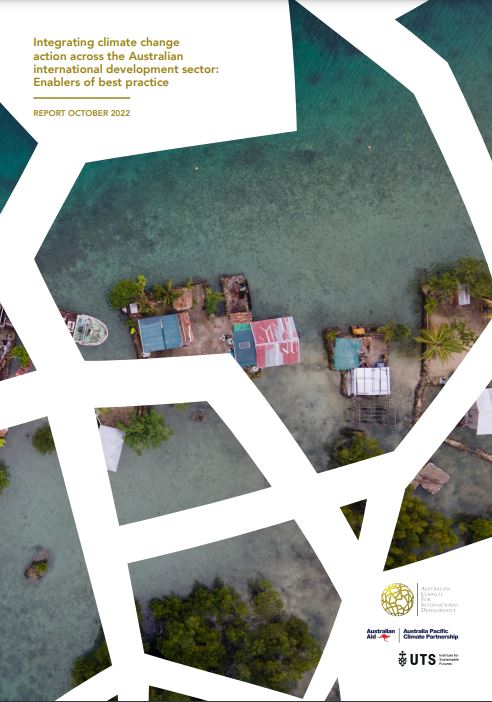
Integrating climate change action across the Australian international development sector: Enablers of best practice

Provides grounded and practical examples of best practice for climate change integration. Case studies are linked to different aspects of ACFID’s Climate Action Framework to demonstrate the various approaches some organisations have taken to integrate climate action into policy, programs and practice.

Cover for integrating climate change document

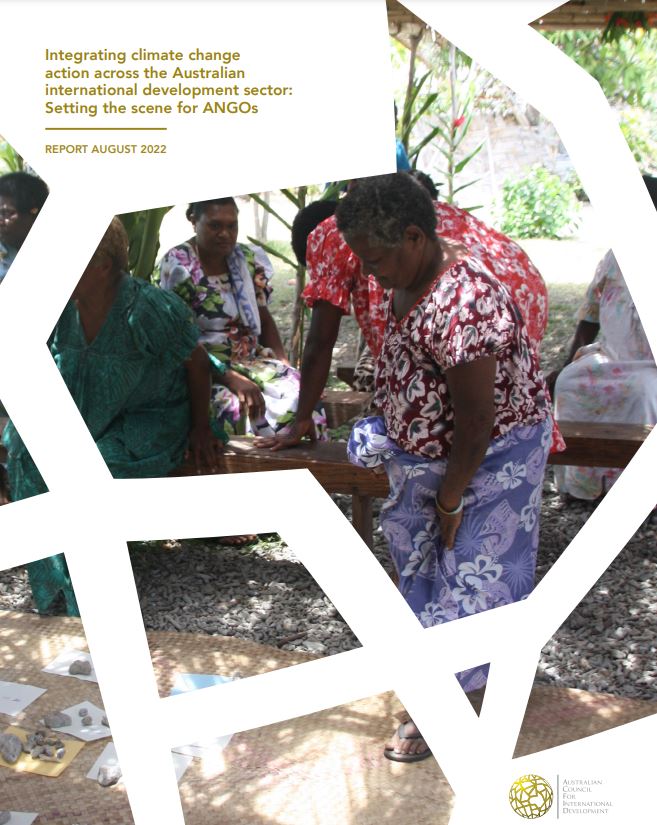
Integrating climate change action across the Australian international development sector: Setting the scene for ANGOs

Describes the system in which Australian NGOs operate for integrating climate change considerations in their development programming.

Climate Action Framework - Summary

Climate Action Framework - Summary

Provides a summary of the framework which addresses climate action.

Climate Action Framework - Full Report

Climate Action Framework - Full Report

This framework seeks to address this issue by providing a clear typology of climate actions relevant to Australian NGOs.

Climate Action Framework - Full Report

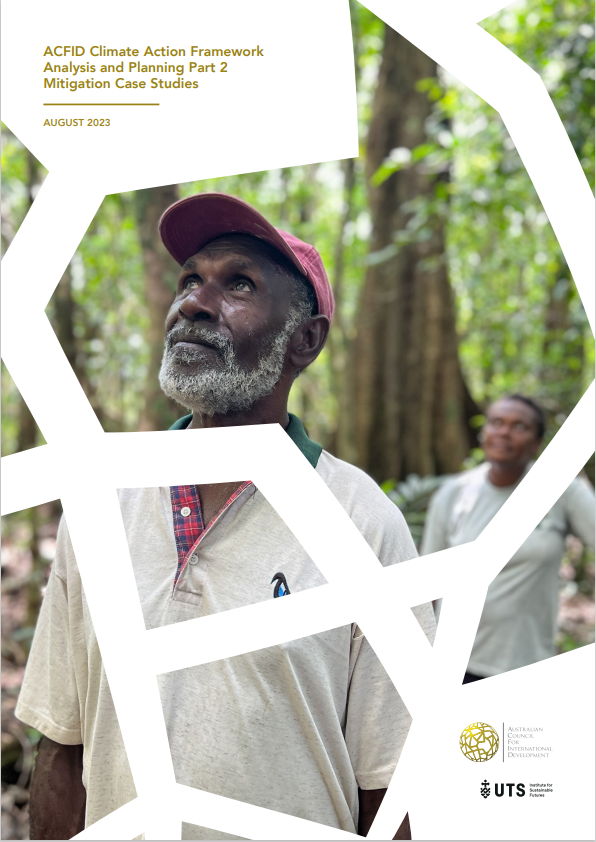
Climate Action Framework - Mitigation Case Studies

This report provides lessons learnt and case studies that demonstrate mitigation aspects of the ACFID Climate Action Framework.

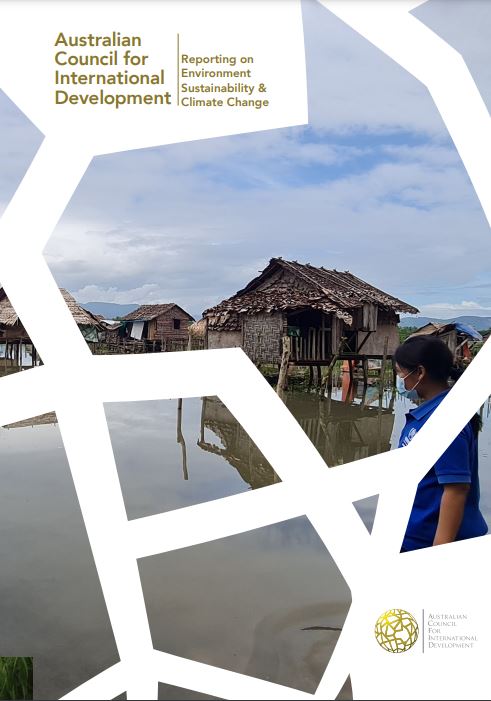
Cover of reporting on environment and sustainability

Reporting on Environment Sustainability and Climate Change

An outline of regulatory requirements and ACFID Code of Conduct requirements for sustainability reporting and examples of reporting from ACFID members, the not-for-profit sector and the for-profit sector.

Climate COP

Join ACFID’s Climate Policy and Practice Committee

ACFID’s Climate Policy and Practice Committee meets regularly to discuss climate work amongst members.

Climate Action Resource Hub

Learn with ACFID: Introduction to Climate Change and Development

Take the Introduction to Climate Change and Development online course now.

Climate Action Resource Hub

Climate Action Resource Hub

View and share resources across ACFID members’ climate work.

Humanitarian Action for Those in Greatest Need

Effective and inclusive Development

Supporting NGOs as Valuable Partners

Development at the Heart of Australia’s International Engagement

Preventation of Sexual Exploitation and Harrasment

Loading...