Home 5 Our Focus 5 Prioritise NGOs as Valuable Partners

Prioritise NGOs as Valuable Partners

Supporting NGOs

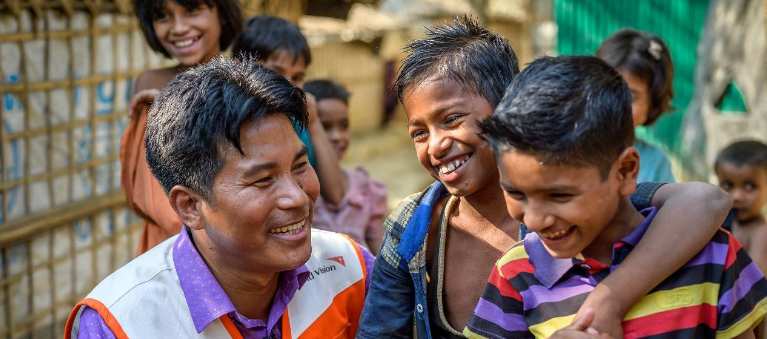
Atul Mrong (L), a former sponsored child (World Vision Australia) talks with Rohingya children in the Rohingya Camp. Atul is now Deputy Operations Director of World Vision’s Bangladesh Refugee Crisis Response in the camps. Photo: Jon Warren/World Vision.

The Government should elevate the role of Australian NGOs in humanitarian development investments, leveraging and recognising their unique value-add in protecting civic sapce, inclusive practice and trusted partnerships with local communities.

Australia should prioritise partnering with the not-for-profit community to maximise development impact and capitalise on the trusted relationships and deep expertise held by Australian development and humanitarian organisations. The renewed focus on locally-led approaches also necessitates greater investment in NGOs with their strong people-to-people connections and long-standing relationships with local communities, often developed over decades of collaboration.

A recent survey of over 50 agencies accredited through the Australian NGO Cooperation Program (ANCP) found a total of 1130 partnerships, with an average partnership length of 11.5 years. Of these, over 250 partnerships have existed for more than 20 years. Australian NGOs have close ties to the Australian public positioning them as critical interlocutors connecting communities across Australia with those throughout the world. In 2021-22, one million individual Australians donated $773 million to ACFID member organisations. While donorship is not a fulsome picture of public support, these figures go some way to detailing public interest in Australia’s role in poverty alleviation and humanitarian support globally.

Due to their specialist expertise and nuanced understanding of local contexts, NGOs and their partners are also well-placed to deliver on the priorities set out in the International Development Policy, particularly relating to local leadership, climate change, gender equality, disability equity and civil society. Local constituent-led organisations such as women’s rights organisations and organisations for persons with disabilities play a crucial role in advocating for and delivering on the priorities of marginalised groups.

Partnerships between these organisations and Australian NGOs closely align with Australia’s development objectives ensuring the aid program is responsive to and reaches all.

Similarly, as a result of their networks, knowledge and relationships at the community level, Australian humanitarian organisations have shown repeatedly their ability to provide unique rapid, localised, and wellcoordinated support to crises as they emerge such as the response to the Turkey-Syria earthquake in 2023.

Despite these benefits, Australia’s development program has increasingly moved away from NGOs as preferred delivery partners over the past decade with just 10 per cent of Australian aid being delivered directly through  Australian NGOs. This is a missed opportunity for Australia’s strategic engagement in the region and globally.

The ANCP has a 50-year track record as a civil society partnership that brings results and lasting impact and enables testing of innovative responses to long term problems, reaching over 57 million people across 54 countries. DFAT’s 2022 evaluation of the ANCP corroborates the effectiveness of the program’s approach;

“the ANCP enables DFAT to support ANGOs to implement activities where they represent the most effective, and in some cases, only effective delivery mechanism.”

Similarly the 2015 evaluation described the ANCP as “one of the best performing programs” delivering “18.2 per cent of DFAT’s aggregate development results for only 2.7 per cent of the overall development program spend.”

Yet, Australian NGOs and their partners are constrained by overburdened budgets with duplicative grant and contractual due diligence and reporting. Together with inflexible and unpredictable funding cycles, this works to reduce opportunities to innovate, and diverts resources away from communities in need.

The Australian NGO Cooperation Program

The Australian NGO Cooperation Program (ANCP) has a 40-year track record as a civil society partnership that brings results, lasting impact, and enables testing of innovative responses to long term problems. DFAT’s own evaluation of the ANCP corroborates the effectiveness of the program’s approach. A 2015 review described the ANCP as “one of the best performing programs,” delivering 18.2 per cent of DFAT’s aggregate development results for only 2.7 per cent of the overall development program spend. The ANCP is currently undergoing an updated independent evaluation.

Advocacy to support NGOs as valuable partners

In advocating for the role of NGOs as valuable partners to deliver Australia’s humanitarian assistance and development cooperation program, ACFID has highlighted the importance of flexible and predictable funding, streamlining compliance requirements, creating headroom for innovation and growth, and prioritising (including through funding) initiatives which aim to build and strengthen partnerships between government, NGOs and the private sector, as well as within and between NGOs themselves. You can read more about ACFID’s advocacy to support NGOs in our Advocacy Agenda.

ACFID also works to elevate the role of NGOs in development through advocating for civil society strengthening across our region.

Humanitarian Action for Those in Greatest Need

Effective and inclusive Development

Supporting NGOs as Valuable Partners

Development at the Heart of Australia’s International Engagement

Preventation of Sexual Exploitation and Harrasment

Loading...